
|
Keynote address by the minister of Environmental
Affairs and Tourism, Marthinus van Schalkwyk MP, at the opening ceremnoy
of the 2004 Tourism Indaba held at the Durban ICC,
on 8 May 2004
If a picture is worth a thousand words then the value of a visit is
that it can hold you speechless. This is the experience of South Africa
that greets the millions of tourists who travel to our shores, to experience
our country, our cultures, and our people.
The real value of tourism goes well beyond concepts like revenue, turnover,
and occupancy rates * the greatest value of tourism lies in its power
to bring people together and to uplift communities. This unifying force
is most visible in the way that tourism draws people across great geographical
distances, but tourism crosses more than just physical boundaries, it
draws people together within countries like South Africa, across the
borders of the mind.
As we gather at Indaba 2004, to showcase the best of South and Southern
Africa, we should recall the story of tourism in our region. Let us recall
that natural icons like Table Mountain, the Drakensberg, Lookout Hill
in Khayelitsha, the bushveld, and God's Window were all here for centuries
* yet tourism visitors were the exception not the rule. It was only once
our people reached out to one another, and our communities found common
ground, that tourism began to flourish.
This Indaba takes place at an important time in South Africa's history.
We are celebrating our First Decade of Freedom and it is no accident
that our most impressive and exponential tourism growth has also been
achieved during the last ten years. Our country has moved from the margins
to the mainstream. Our tourism industry is moving into a fresh phase
in which South Africa is breaking new ground, setting new trends, and
using tourism to uplift our people.
We must take pride in the positive story of Southern African tourism.
Ours is a uniquely African story of cooperation and innovation, of tradition
and technology, of pride and of potential. With our Southern African
neighbours as our partners, we will continue to carve an ever-expanding
niche in world tourism.
What we are achieving * consistent growth in tourism - is a direct result
of the strong partnership that has been forged between national, provincial
and local government, business, labour, and especially our communities.
The performance of tourism over the last five years has demonstrated
that our industry has been in safe and skilled hands. I would like today
to thank and pay tribute to my predecessor, Minister Valli Moosa. I would
also like to thank our DG, Dr Crispian Olver and our department. My appreciation
also goes to Rick Menell and the Board of SA Tourism, as well as CEO
Cheryl Carolus and her staff for their hard work and dedication. I would
also like compliment each and every one of you, as stakeholders, for
what has already been accomplished in our industry.
From being a nation on the margins of global tourism, we stand now at
the heart of the tourism world. Our country continues to offer unparalleled
experiences and almost unbeatable value for money - a potent combination
that is reflected in our tourist arrival figures.
Last year was a difficult one for tourism around the world with a 1,2%
drop in global travel * yet South Africa achieved a 4,2% increase in
overseas arrivals and a 1,3% increase in total foreign arrivals. This
success confirms our long-term sustainability as a preferred tourism
destination, with arrivals having grown from a mere 640 000 in 1994 to
6,5 million last year.
These are our successes, and they are well-deserved. In a dynamic industry
like ours however, it is clear that many challenges remain to be faced.
Tourism is one of our country's five most important economic growth
sectors because of its great potential to contribute to sustainable economic
growth, job creation, and poverty eradication. Further unlocking this
potential will be the focus of our department over the next five years.
One of the most important challenges we must address is the further
transformation of our industry. Before 1994, South African tourism was
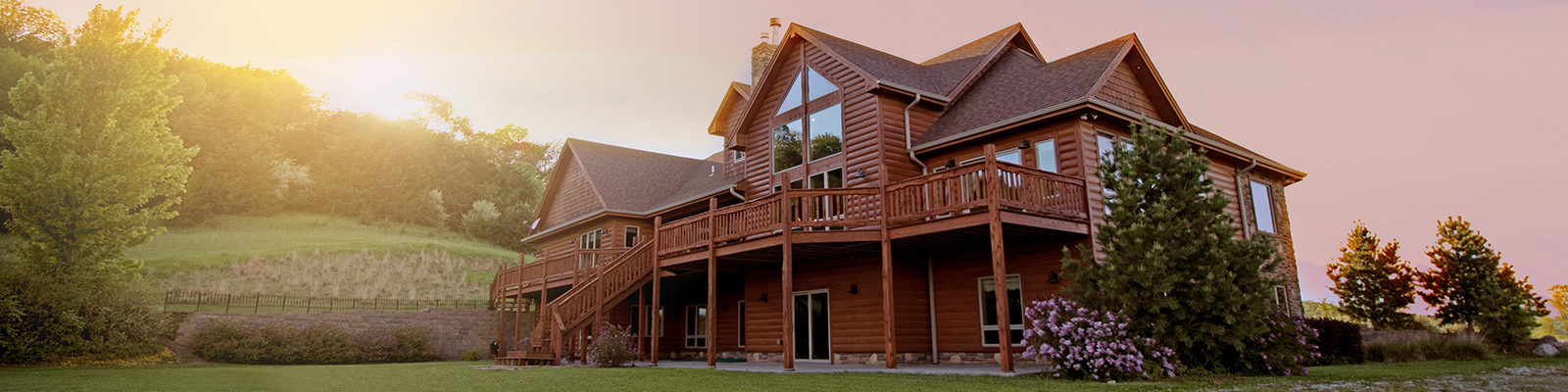
like a house in which only a few could live, with the rest of South Africa
left to peer through the windows. It was a cold house, with little warmth
and no heart, and its hospitality was flawed. Since 1994 we have opened
the house of South African tourism to all.
We will be finalising our Black Economic Empowerment Scorecard by the
end of this year which will form the basis of our future empowerment
efforts. We will also be concentrating greater resources on increasing
the share of tourism received by our six least-visited provinces. For
too many decades tourism was another symbol of what was wrong with South
Africa, today and in the future tourism represents that which is best
about our country.
Our goal must be to increase the number of tourists that visit our country
and our region. We must aim to have them stay longer, spend more, travel
further, and return repeatedly. Perhaps even more importantly, we must
ensure that their experiences are, without exception, unforgettable.
In this respect, every South African is a host, every shopkeeper, every
taxi driver, every petrol pump attendant is an ambassador. Our visitors
take hundreds of thousands of photographs, but their most valuable souvenirs
are the memories that they carry in their hearts.
The house of Southern African tourism that we build together should
also avoid the danger of being a house of cards. We need solid local
foundations, bricks and mortar, to ensure sustainable growth. We have
benefited from currency fluctuations and global insecurity, but these
are not long-term guarantees as tomorrow they may work against us. Therefore
another important theme for our next five years is a focus on local markets.
The reality is that domestic tourism and intra-African tourism present
some of our best growth opportunities. All leading tourism nations like
France, Italy and Spain, rely on robust domestic tourism to an even greater
extent than on international visitors. In the same way that our Tourism
Growth Strategy has boosted international arrivals, I am proud to announce
that our department is officially launching our Domestic Tourism Growth
Strategy at Indaba 2004.
These strategies are positioning our country as a globally competitive
player, with an in-depth understanding of individual markets, and a new
focus on customer-driven products.
On the international front, we are in the process of completing our
Tourism Competitiveness Study which will focus and optimise our international
marketing efforts. In the process, I believe we need to target regions
like South America, the Near and Far East, and China * areas experiencing
rapid economic development.
There are, of course, other issues that continue to dog our industry,
like seasonality. Our renewed focus on domestic and local tourism will
aim to offset the reduced international demand in off-peak periods, while
we will continue to expand our 'Magical Events' strategy. I was delighted
to note the appointment of Rick Taylor to drive SA Tourism's MICE (Meetings,
Incentives, Conventions and Events) strategy, and we wish him well.
It is well-known that increasing air access was one of the issues closest
to my heart in the Western Cape, and I believe that on the national level
it is just as important. We will be collaborating with our colleagues
in other departments to prioritise bilateral and multi-lateral negotiations
with key markets * to increase the accessibility of our outstanding tourism
products, and also to examine enhanced visa access for, and improved
services to tourists.
Ladies and gentlemen, it is for all these reasons that I believe Indaba
2004 is correctly centred on the theme: "South Africa: A 10/10 destination." This
speaks both of how far we have come and how we approach the next decade
together.
As Africa's premier travel and trade show, Indaba has already succeeded
by bringing together record numbers of exhibitors and delegates from
all corners of the globe. My compliments to everyone involved.
Our region is blessed with both cultural and natural potential. You
have enhanced this potential with your products and energy. We are determined
to match your efforts with innovative programs and focused marketing.
Together we will continue to grow South and Southern Africa as a tourism
destination of distinction.
|